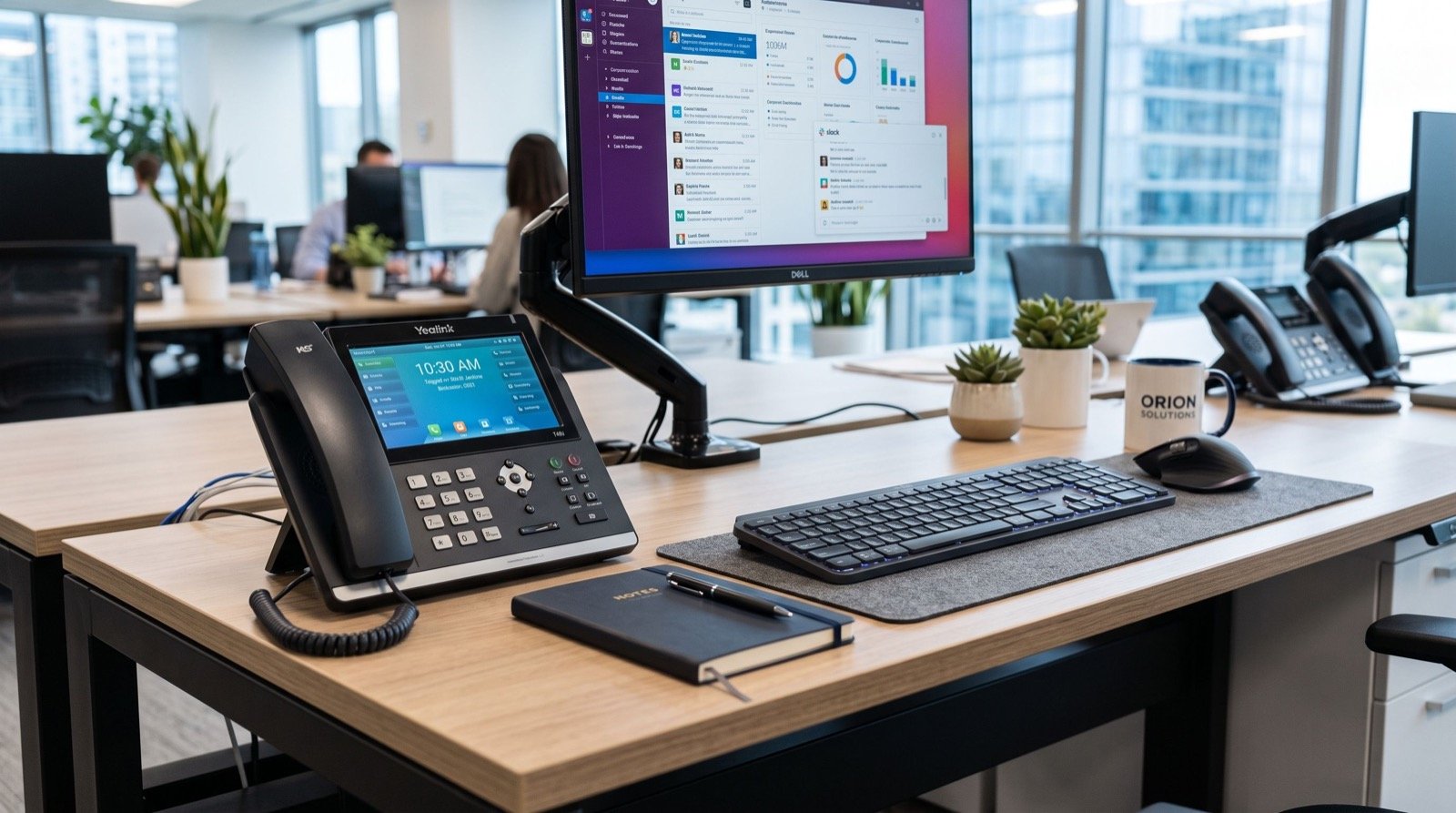
Fanvil V61G Prime Business Phone for Realty Offices
Real estate offices in Rawalpindi live and die by the phone. A missed call from a buyer asking about a plot often means the deal walks straight to a competitor. That is why more agencies across the city are replacing tired analog handsets with the Fanvil V61G Prime Business Phone as part of a broader push to modernize their sales floors in 2026.
This piece looks at why phone systems matter so much in property sales specifically, and what a sensible upgrade path looks like for a busy brokerage.
The Real Estate Call Volume Problem
A mid-sized Rawalpindi agency can field well over a hundred calls a day during peak listing season. Multiply that across five or six agents, each juggling site visits, client follow-ups, and walk-ins, and it becomes clear why a basic single-line phone is simply not built for the job.
Dropped calls, garbled audio on a bad line, or no way to transfer a buyer to the right agent quickly all translate into lost commissions. It is an operational problem disguised as a minor inconvenience.
What Changes When You Upgrade to the Fanvil V61G Prime Business Phone?
Agencies that move to proper business-grade IP handsets typically notice three things almost immediately: clearer audio on long client calls, faster internal transfers between agents and the front desk, and the ability to run multiple lines without tangled extension cords and bulky PBX boxes.
None of these sound dramatic individually. Together, they change how a sales floor actually functions day to day.
Feature Comparison for Brokerage Offices
| Need | Old Analog Line | Basic VoIP Box | Modern IP Handset |
|---|---|---|---|
| Simultaneous Calls | One per line | Limited | Multiple, managed easily |
| Transfer Speed | Slow, manual | Moderate | Fast, one-touch |
| Audio Clarity | Inconsistent | Decent | HD voice quality |
| Setup Cost Over Time | Low, but limited | Moderate | Cost-effective long term |
A Practical Rollout Plan for Agencies
- Start with the front desk, since that is where the most calls land first.
- Assign direct extensions to top-performing agents rather than a shared queue.
- Keep one backup handset ready in case a unit needs servicing.
- Train agents on call transfer and hold features during a slow afternoon, not a busy Saturday.
- Review call logs monthly to catch missed-call patterns early.
Agencies that follow a plan like this tend to see fewer client complaints within the first month, simply because calls stop getting lost in the shuffle.
Why Reliability Matters More in Property Sales
A buyer calling about a plot in a high-rise development rarely calls back if the first attempt drops. Unlike many service businesses, real estate leads are often one-shot opportunities. That is part of why agencies lean on dependable specialists for both the property side and the technology side of running a modern brokerage, rather than treating phone infrastructure as an afterthought.
Checking current options for fanvil ip phones before committing to a bulk purchase also helps agencies match hardware to their actual agent headcount instead of over-ordering.
Training Agents to Use the New System Well
Buying better hardware only solves half the problem. Agents who are not comfortable using transfer, hold, and conference features will keep falling back to old habits, like putting a caller on hold and shouting across the room for a colleague. A short training session, ideally run during a quiet mid-week afternoon rather than a busy Saturday showing, makes a noticeable difference in how quickly the office adapts.
Pairing newer agents with experienced ones during the first week of using the new system also helps. Most questions about transfers and call routing come up naturally during real client calls rather than in a classroom-style session.
A Quick Case Example
Consider a six-agent Rawalpindi brokerage that upgraded its front desk and top two performing agents first, leaving the remaining desks on the old system for a month. The office reported noticeably fewer missed-call complaints from buyers within the first two weeks, simply because the busiest desks were no longer the bottleneck. By the time the remaining desks were upgraded, staff already understood the system from watching their colleagues use it daily.
This kind of staged, observed rollout tends to produce smoother adoption than flipping every desk over on the same day.
Cost Considerations for Smaller Agencies
Smaller brokerages sometimes assume a full phone system upgrade is out of reach financially. In practice, a staged rollout, starting with the busiest two or three desks, spreads the cost and lets the office see the benefit before committing to a full-floor replacement.
According to global telecom guidance from the International Telecommunication Union, standardized VoIP protocols have significantly lowered the cost barrier for small and medium businesses adopting modern call infrastructure, a trend that continues to benefit local agencies through 2026.
Frequently Asked Questions
Do real estate offices need special features on an IP phone?
Fast transfers and good audio quality matter most. Advanced call center features are rarely necessary for a typical brokerage office.
How many lines does a 5-agent office typically need?
Most agencies run comfortably on 6 to 8 lines, accounting for the front desk and a small buffer for overlapping calls.
Will upgrading disrupt daily sales calls?
Not if rolled out desk by desk rather than all at once. A staggered approach keeps the office fully operational throughout.
Is it worth upgrading a small two-agent office?
Yes, even small offices benefit from clearer audio and fewer dropped calls, since every missed buyer inquiry has a direct cost.
Maintaining the System After Launch
Agency owners naturally want to know how long before an upgrade like this pays for itself. Most agencies notice fewer missed calls and smoother transfers within the first two to three weeks, well before the hardware cost is fully recovered through saved leads that would otherwise have gone to a competitor.
An upgrade does not end once the new handsets are plugged in. Agencies that get the most long-term value tend to review call logs monthly, checking for patterns like a particular desk missing an unusual number of calls or an extension that is rarely used and could be reassigned.
Firmware updates deserve the same attention. A quarterly check for manufacturer updates keeps call quality and security current, and takes far less time than dealing with an issue after it has already affected client calls.
Office managers who treat the phone system as ongoing infrastructure, rather than a one-time purchase, tend to get several more years of reliable service out of the same hardware.
Closing Thoughts
Phone reliability is not glamorous, but in Rawalpindi’s competitive property market, it is often the difference between closing a sale and losing it to a faster-responding competitor. Agencies planning their 2026 office upgrades should treat the phone system with the same seriousness as their listings software.